

Monterosso al Mare
Cinque Terre National Park
The old village
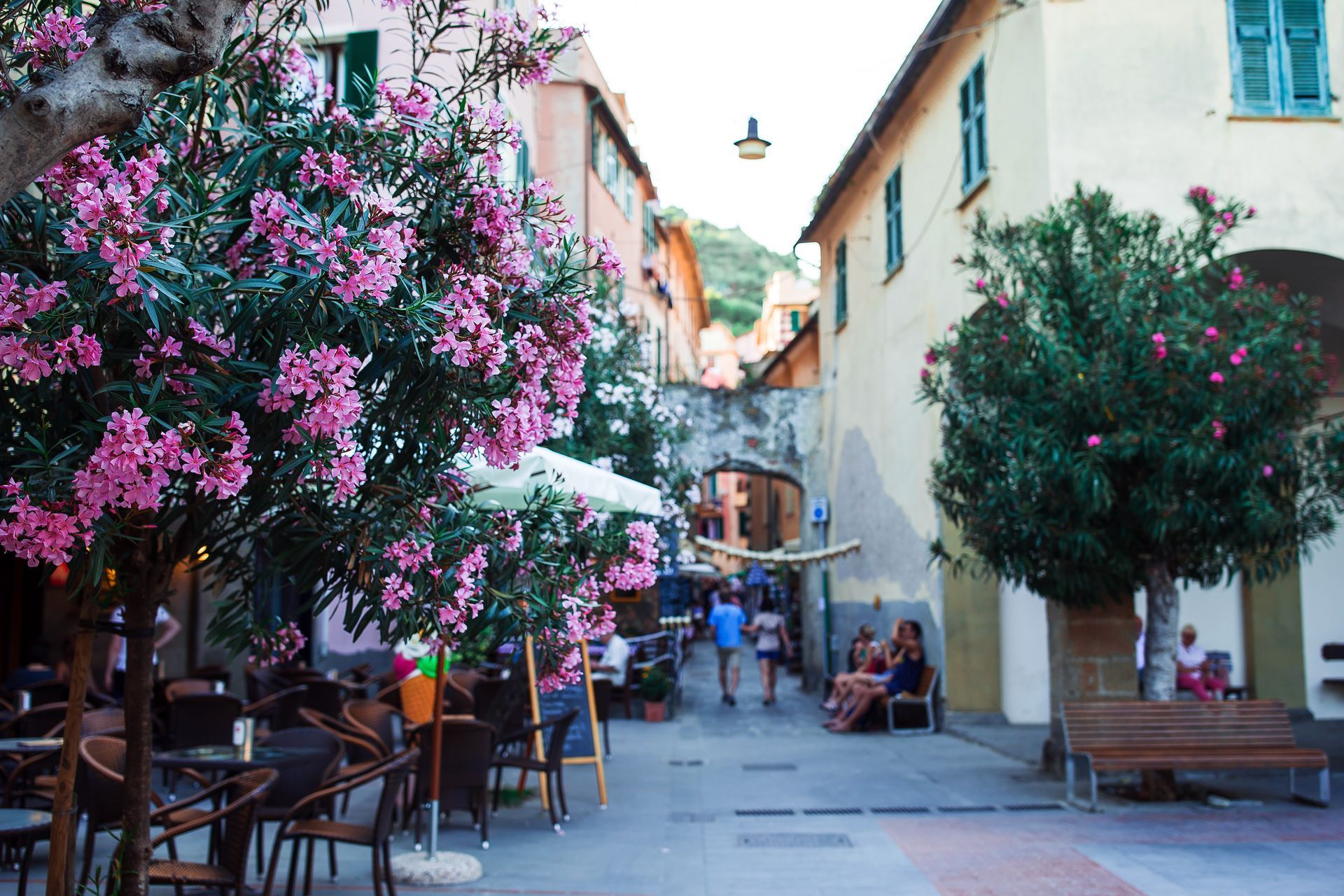
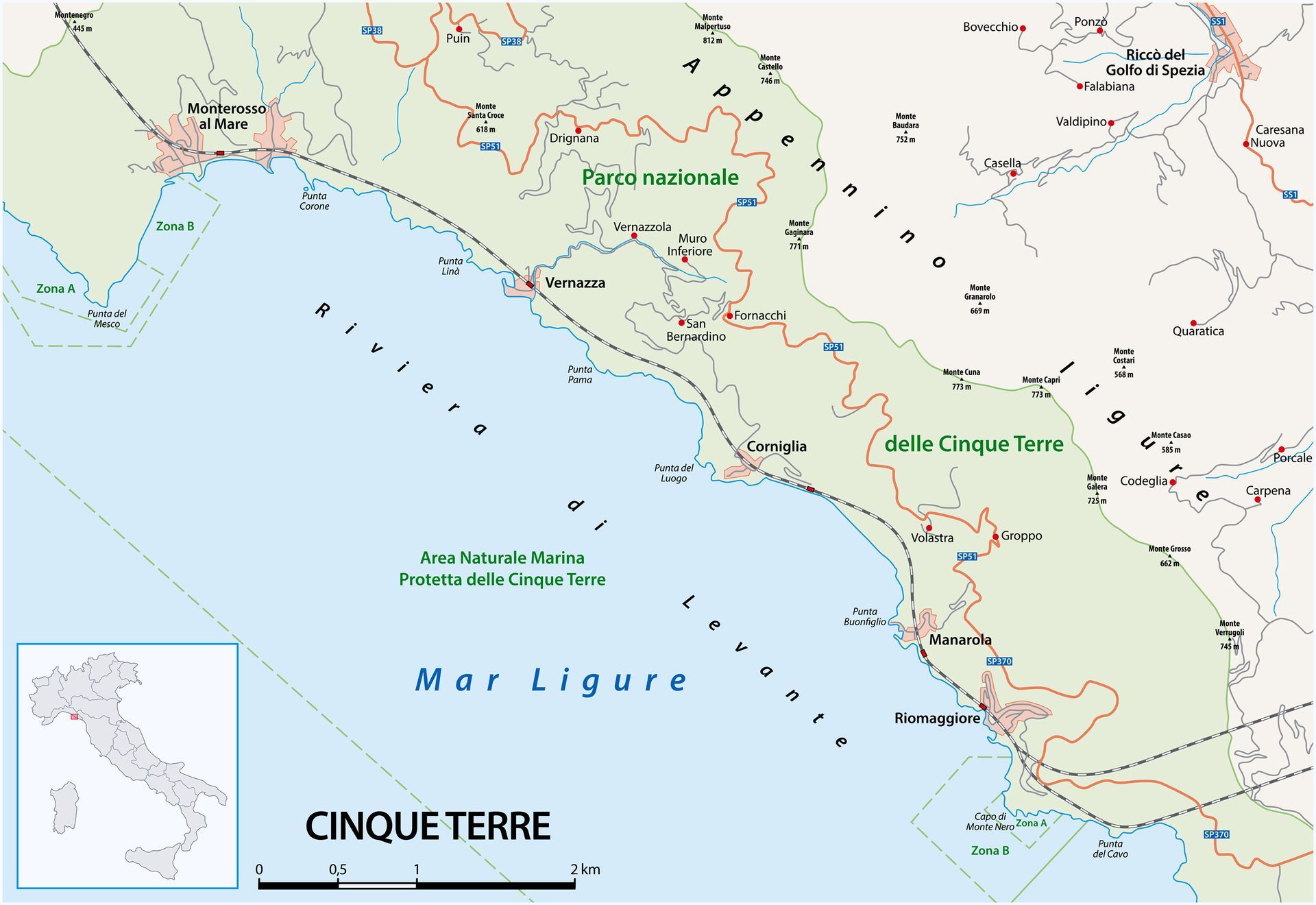
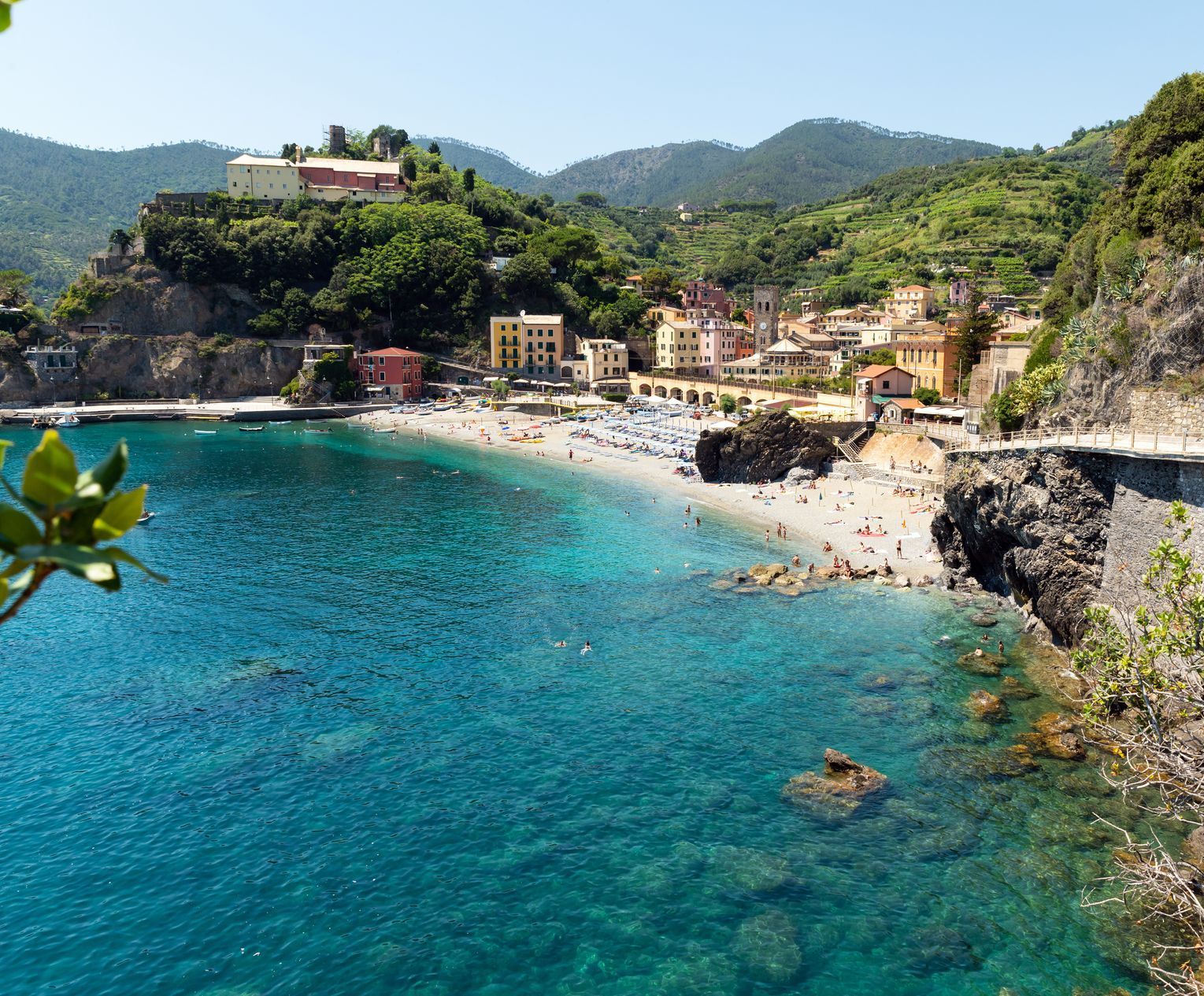
Of the Cinque Terre, Monterosso is the most famous and the last of the five villages. It is about thirty kilometers from the city of La Spezia. The town overlooks a sort of gulf, closed to the north by Punta Mesco and surrounded by terraced ledges built on the slopes of the hills that slope down to the sea.
A land whose shape and structure have been profoundly altered over the centuries by generations of inhabitants and has today transformed into a paradise where lemon trees, olive trees, and the famous vines that produce schiacchetrà, a fragrant after-dinner white wine renowned throughout the world, are cultivated.
From the seafront you can enjoy a view of the beautiful Fegina beach, which fits perfectly into the new part of Monterosso.
From the beach, toward the eastern part of the medieval village, you'll discover the entrance to the Sentiero Azzurro (Blue Path), a sort of enchanting panoramic terrace from which you can glimpse, in an irregular yet harmonious succession, unforgettable views of caves, coves, cliffs, small beaches, and rocky outcrops plunging into the crystal-clear sea.
At sunset, looking from the village toward the horizon where the mountains and the sea merge, you'll see, sometimes through hazy clouds, the red rays of the sun illuminating the mountains, finding a hiding place for the night behind them. Some believe the name Monterosso derives from this daily occurrence, others believe it comes from the color of the local rocks.
The Story
According to documents dating back to the year 1000, Punta Mesco was home to the area's first inhabitants, but it wasn't until the 11th century that the current village of Monterosso was established along the Burranco River. Its founders were likely the legendary inhabitants of Albaretto, a village located in the surrounding mountains that had been destroyed by the Lombards around the year 600.
The village developed under the feudal jurisdiction of the Obertenghi family, direct descendants of the Lombard king Oberto I, who from the year 614 governed the vast area that stretched from the ancient village of Bobbio in the Piacenza area to much of Liguria, the Cinque Terre and the northern Tuscan territories of Lunigiana and Garfagnana.
The presence of the Obertenghi family in Monterosso is evidenced by the remains of a medieval castle discovered within the walls of the ancient cemetery overlooking the bay. Towards the end of the 13th century, in the wake of alternating battles between the Maritime Republics of Pisa and Genoa, Monterosso was conquered by the Republic of Genoa, which finally consolidated its power over the entire Ligurian Sea. The castle, still visible today, was at that time reinforced as a defensive military fortification by the Republic of Genoa.
It was under the rule of the Republic of Genoa that Monterosso began growing wheat, and terraced ledges were created on the hills sloping down to the sea, where vineyards were planted. These terraces were protected at the base by dry stone walls. Only in the 17th century did the inhabitants begin the new economic activity of fishing.
This enterprise is documented by the existence of a large series of tuna fishing nets (called tonnare) set up far from the coast of Punta Mesco. This new trade, along with the cultivation of lemons and vineyards, was the source of bitter disputes with Genoa.
The Castle
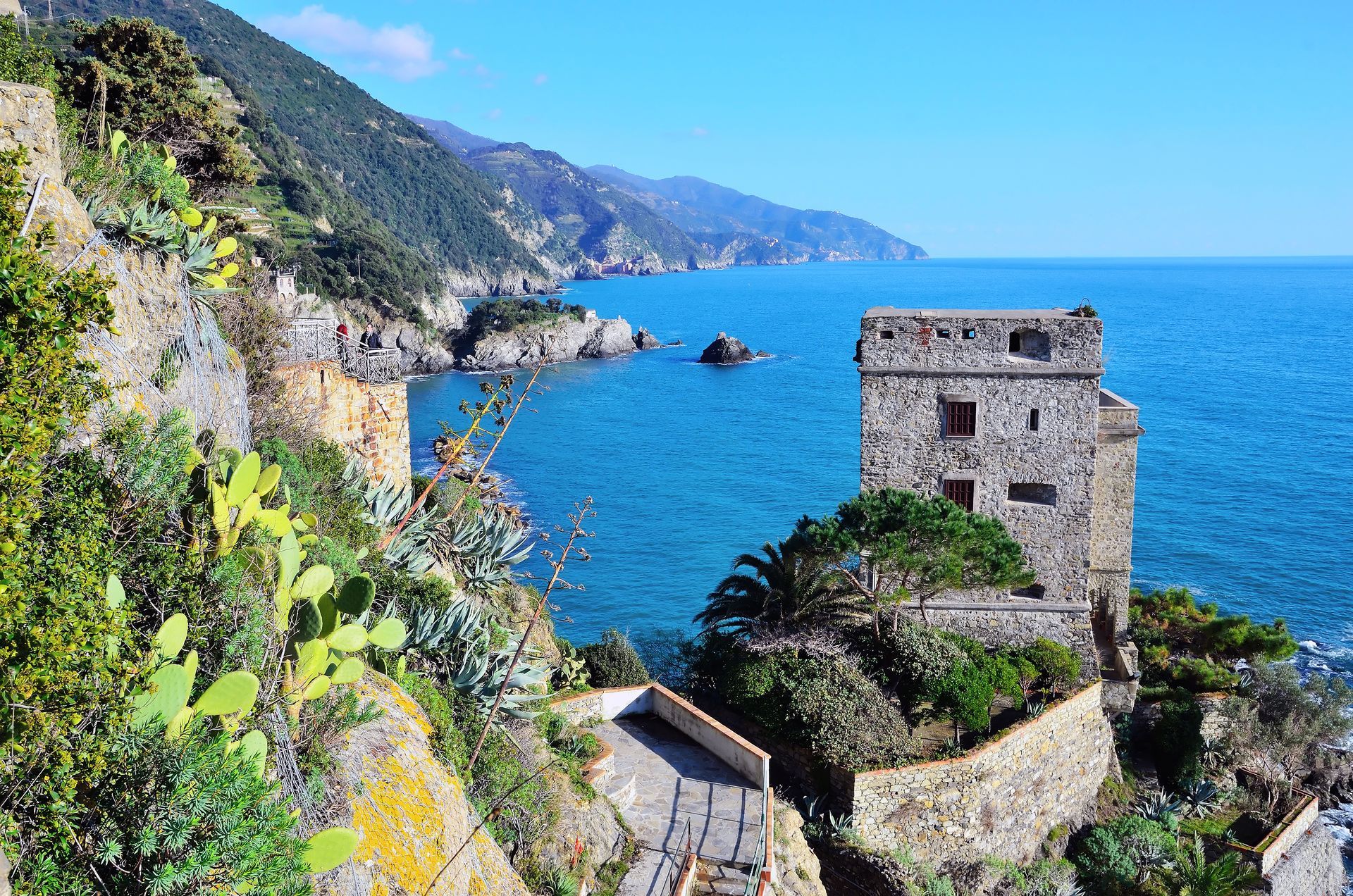
The ruins of the castle stand atop the hill overlooking the town at the end of Via Buranco, Monterosso's oldest street. It was built by the Obertenghi family, the feudal Lombards who ruled over the entire Cinque Terre.
The castle was built to defend the village from the Saracens and was, over the centuries, remodeled by the Doria, the Fieschi and the Saporiti, all ruling Genoese families.
Today, very little remains of the original structure, only the tombs of the ancestors built inside the bastions or underground. These are the sentinels of the burial ground protected by the apse of the church of San Cristoforo, which serves as the cemetery chapel.
The Capuchin Convent
The Capuchin friary seems to watch over the tranquility of the village. The shaded courtyard overlooks the Cinque Terre coast, and the crystal-clear sea is visible in all its beauty. The convent was built in the 15th century, beneath the castle on the hill dedicated to Saint Christopher, on the border separating the medieval village from the modern hamlet of Fegina. To reach the convent, you must climb a staircase located opposite the Aurora Tower.
Inside the convent chapel, dedicated to Saint Francis, the various wooden altars are noteworthy, as well as a painting of the crucifixion attributed to the Flemish painter Anthony Van Dyck (1599-1641), a guest of the Spinola family in Genoa for several years.
The Sea
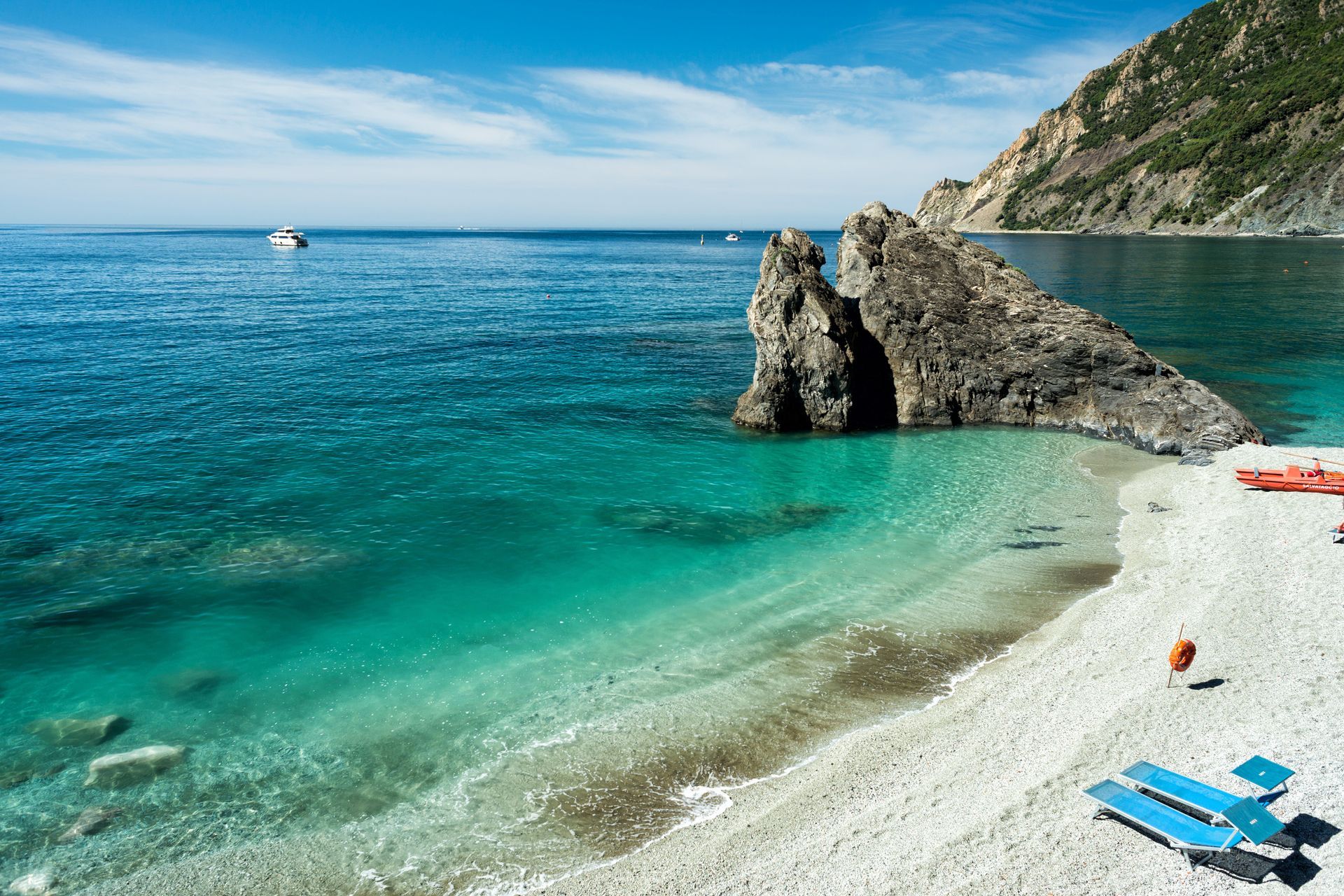
Some say the unique beauty of the Cinque Terre, with its colorful villages, is tinged with one small flaw: its beaches. In reality, there are only a few, and it's not easy to find a suitable spot for swimming. This, of course, isn't true of Monterosso. The beaches here are beautiful; in fact, in 2007, Forbes magazine added them to its list of the 25 sexiest beaches in the world. The beaches are easily accessible, especially if you arrive by train; in fact, Fegina Beach is located directly across the street from the train station, and extends to both sides.
The esplanade begins at the "giant" Punta Mesco, on the western side of Monterosso, and offers magnificent views of the sea as it collides with numerous rocky cliffs and reefs. A perfect place to rest is in front of Bar Eden, built on stilts in 1920. At the end of the promenade, a tunnel leads to the oldest medieval village, which can also be reached by a path higher above the cliffs. The second, equally beautiful beach is located on the other side of the promontory, enclosed by the small marina and the railway viaduct.
The esplanade ends where the famous trail to Manarola begins. This is called the "Sentiero Azzurro" or Blue Path. This will then become the "Via dell'Amore" or "Path of Love" as it continues from Manarola to Riomaggiore. If you decide to hike this trail, prepare yourself for a memorable experience.
Eugenio Montale
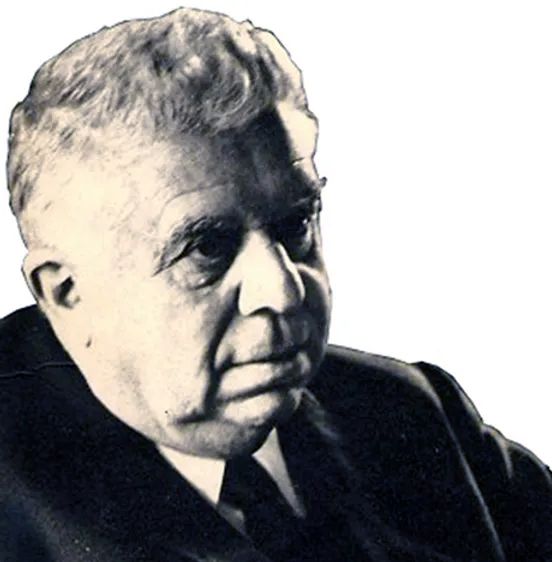
The title "The Gulf of Poets" wasn't given to this area by chance. Several famous poets and writers have enjoyed their holidays here, including Byron and Shelley. In his later years, Italian Nobel Prize winner Eugenio Montale spent much of his childhood, and later most of his summer holidays, in Monterosso. "Here, by a miracle, the fatigue of frustrated passions is soothed; here even we, the poorest, find a fortune, and it is the scent of lemons..." (translation by Millicent Bell). From the poem, "The Lemons," 1921. This is how Eugenio Montale, through his poetry, describes the beauty of Monterosso and how the Cinque Terre should be discovered. His parents owned an Art Nouveau villa here, a house Montale called "the ochre pagoda" or the "villa of the two palms." Unfortunately, this villa is now closed to visitors as it is privately owned, but alternatively, you could visit the "Literary Park" dedicated to the poet. Official guides will lead you through the terraces that descend to the sea and the atmosphere that inspired his poetry. During these visits, poems from his book "Ossi di Cuttlefish" will be read.
The medieval village cemetery, where the Montale family tomb is located, is worth a visit, as he often mentions it in his poems. Regarding his relationship with the Cinque Terre, Montale admitted that "the time in Monterosso was truly formative, but it also sparked my introversion and led to a sense of imprisonment in the universe."
Festival
June 23/24 - Feast in honor of St. John the Baptist. The bonfire held on the evening of the 23rd on the beach near the town's historic center is very spectacular. On the 24th, the celebrations continue with a procession of local religious brotherhoods and, particularly memorable, the release of lit candles into the sea.
Third weekend in May – Lemon Festival. The entire population of Monterosso gets involved, and every corner is decorated with this beautiful and aromatic fruit. During the festival, you can visit a local lemon grove.
Third Weekend of June – Anchovy Festival Monterosso, like all the other villages, is famous for its anchovies caught in the local ocean and for the way they are cooked and preserved. This festival is celebrated with food stands offering anchovies and all kinds of local products. At night, the festival concludes with boat trips where you can admire the torchlight fishing.
Third week of September – Preserved Anchovy Festival Monterosso is especially famous for its anchovies, once preserved exclusively in sea salt. Throughout the village, visitors are offered samples of this traditional fish while sipping local white wine.